CTE Month Highlight: Computer Science at Corvallis High School
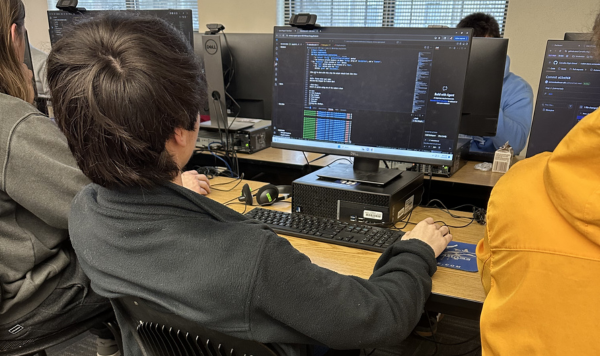
Our next highlight for Career and Technical Education Month is our Computer Science Program at Corvallis High School. In teacher Randy Macdonald’s class, he provides quick reminders and technical tips while letting the students guide their own learning.
AP Computer Science A
These students are learning object-oriented programming, a way of organizing code into “objects” that represent real-world things. A big part of their day is working directly in the program, using code suggestions to help them understand how different parts of a system talk to each other.
Students also learn to find error messages, figure out what they mean, and fix them. They are constantly updating code, running the program, and testing the results. This teaches them to pay attention to formatting, as even a tiny typo can break everything. To keep track of it all, they use “commits,” which are save points that record what they changed and why.
AP Computer Science Principles
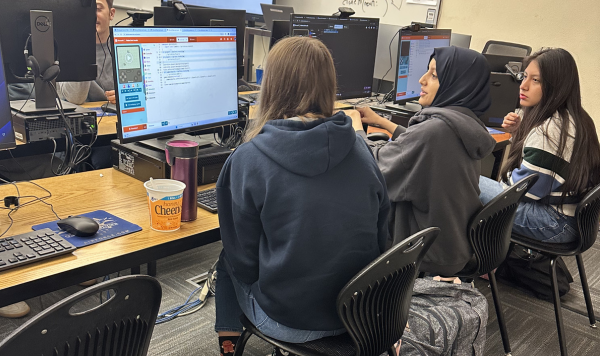
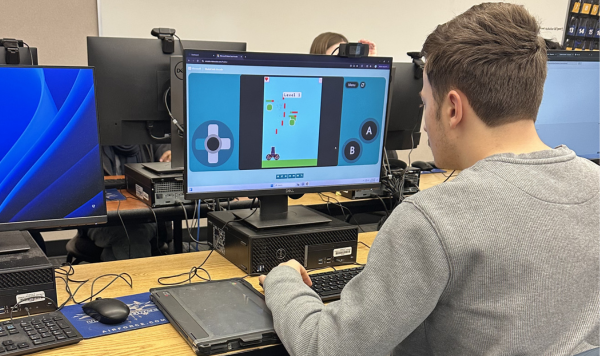
Right now, students in this class are building classic arcade games using the Microsoft MakeCode Arcade platform. It’s a lot of hands-on problem-solving as they write code for different parts of the game to see if they actually work. If it does not, they have to find the error in their code. Since many students work in groups on the same project, communication is key. They have to talk to their teammates about planned changes so they do not accidentally write over each other’s work.
In the Classroom
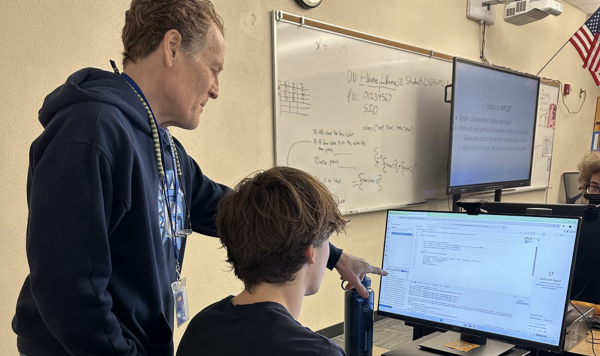
As Mr. Macdonald moves between students, he asks questions like “Is it working the way you expect?” or “Where do you think the code is wrong?” This pushes students to think critically and find their own solutions.
In this lab, having a “perfect” game is less important than the process of working together and communicating. You can usually tell when a group has figured it out. The excitement and cheers when a piece of code finally clicks can be heard throughout the room.
Advanced Topics
Beyond the AP level, students can enroll in Advanced Topics in Computer Science, where they investigate the latest state-of-the-art tech. They eventually propose and build a final project to solve a problem for themselves or their community. While the technical skills are great for future careers, the real value comes when things do not work. The biggest learning happens when students face a challenge, do not give up, and find a way to make it happen.
Learn more about our CTE programs here: Career & Technical Education (CTE)
Read More
Celebrating CTE Month: Pre-Engineering at Crescent Valley High School
CTE Month Highlight: Automotive Program and Metals 2 at Corvallis High School
CTE Month Highlight: Preparing Future Healthcare Providers at Crescent Valley High School

Corvallis Oregon, 97333
Corvallis Oregon, 97333